

Apple TV+ Severance, Memory, Identity, and Freud
Is it possible to split our brain into two halves and live separate lives? What about the mind? Can "repressed" thoughts and emotions buried in our unconscious surface and affect our present actions?

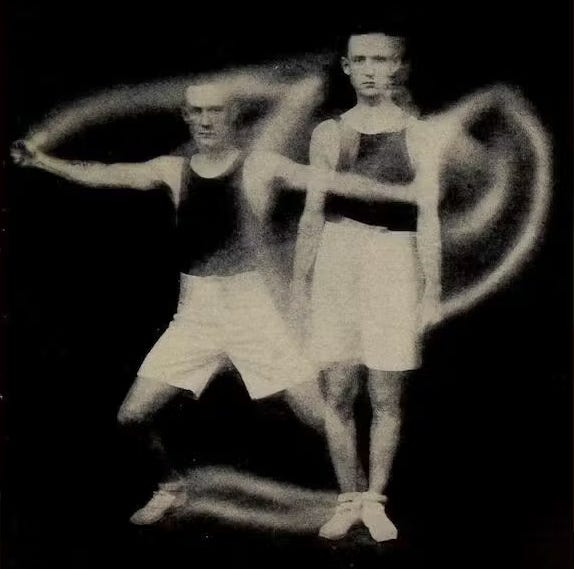
Most cultures have somehow represented duality throughout history. Yin and Yang, good vs. evil, the carnal body vs. the mind, matter and energy. These oppositions reflect something deeply human: the sense that we are not singular, unified beings, but rather a complex interplay of competing forces.
Perhaps this is why the idea of a double life is so appealing to us. From ancient myths to modern psychological thrillers, we are fascinated by characters who hide secret identities, who live as one person by day and another by night—ever heard of superheroes, anyone?. This desire may stem from our own experience of fragmentation—how we shift roles, try to suppress emotions, or wear masks to navigate society. At work, we are expected to perform and to be professional. On social media, we envy people’s perfect lives—even though they’re fake.
This is probably why Apple TV+ series Severance is acclaimed by the critic. This is certainly why it caught my attention and I’m here writing this blog post right after watching the breathtaking season finale. For those of you who might not be so familiar, Severance presents a dystopian vision of the workplace: what if we could surgically separate our work and personal memories? In this fictional world, a chip implanted in the brain creates two distinct selves—the "innie," who exists only at work, and the "outie," who remembers everything else. As surreal as this premise sounds, it invites serious reflection on what neuroscience knows about memory and the boundaries of consciousness. Surprisingly, it also brings us back to one of psychology's most enduring and controversial figures: Sigmund Freud.
The Neuroscience Perspective
Is there a specific place in the brain where memories are stored? Not really. Modern neuroscience views memory as a distributed process. As the Queensland Brain Institute puts it:
Memories aren’t stored in just one part of the brain. Different types are stored across different, interconnected brain regions. For explicit memories – which are about events that happened to you (episodic), as well as general facts and information (semantic) – there are three important areas of the brain: the hippocampus, the neocortex and the amygdala. Implicit memories, such as motor memories, rely on the basal ganglia and cerebellum. Short-term working memory relies most heavily on the prefrontal cortex.
Memories are, therefore, spread across networks of neurons in the brain and those networks vary greatly depending on the type of memory. The idea that a microchip could selectively split all memories related to work or home life contradicts everything we know about how interconnected and dynamic memory truly is.
There actually is something called “split-brain surgery” and it’s been done for about 8 decades. It’s usually indicated for some patients with severe epilepsy. They undergo a procedure that severs the corpus callosum, the connection between the left and right hemispheres of the brain. Research has shown that, once disconnected, each hemisphere could process information independently. In some cases, it even appeared that two distinct minds coexisted in the same brain.
Split-brain patients might give different answers to the same question simultaneously. When asked what they prefer for dinner or what career path they will choose, it’s possible for them to say something and to write a completely different answer on a piece of paper– and strangely have no recollection of that whatsoever.
H.M. and the Discovery That Changed Our Understanding of Memory
One of the most surprising findings in the study of memory came from a famous patient known as H.M., who had severe and widespread memory loss after brain surgery that removed his hippocampi—at the time, doctors didn’t really know what the hippocampus was for. The surgery seemed to be a success because it stopped H.M.’s seizures. However, soon the medical team realized he was no longer able to form new long-term memories. H.M. holds the record for the most studied brain and he amazed researchers in an experiment led by Brenda Milner in 1962.
In the task, H.M. was asked to trace the outline of a five-pointed star — but with a twist. He had to do it by looking only at a mirror reflection of his hand and the star, a challenging visuomotor skill known as mirror-drawing. Over ten practice trials, H.M. improved significantly and showed excellent retention even after three days.
The most remarkable part? He had no memory of ever doing the task before.
This groundbreaking discovery revealed that not all memory is the same. In H.M.’s case, the ability to form new personal memories was impaired, but his brain could still learn and retain motor skills.
The Hippocampus and Spatial Navigation
As I mentioned before, the hippocampus plays a central role in forming and retrieving memories. But it has also been associated with navigating physical spaces. The show does a brilliant job depicting the transition between a person's innie and outie-even the camera lens is usually masterfully. It happens when they cross a door, usually the office elevator doors. Ever went through the door of your bedroom to completely forget what you were going to do? Well, there’s something called "doorway effect". That’s when people often forget information simply by walking through a doorway, suggesting that spatial context and memory are deeply intertwined in the hippocampus.
The most powerful example of how the hippocampus is directly related to episodic memories and spatial navigation is what typically happens to Alzheimer’s patients. Studies show how their hippocampi are affected by this terrible neurodegenerative disease and how its deterioration leads to a struggle not only in retrieving memories but also in accessing their mental maps of their surroundings. That’s why those who have advanced Alzheimer’s often feel a sense of disorientation and have the tendency to get lost.
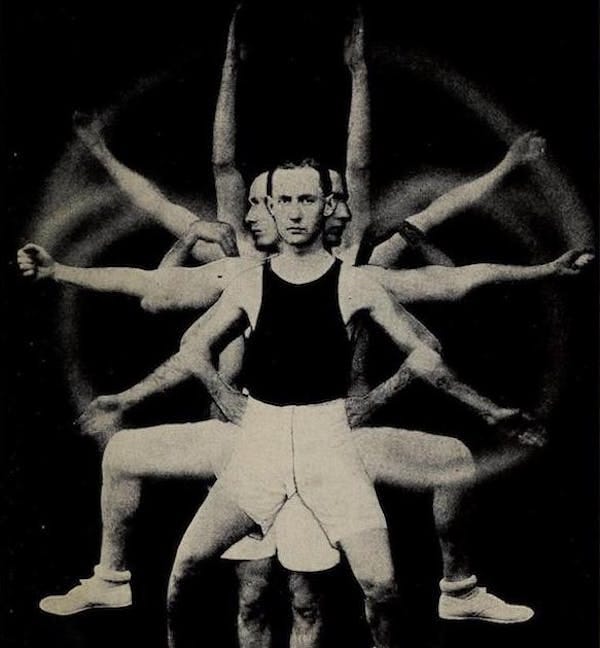
What about Freud and the Unconscious?
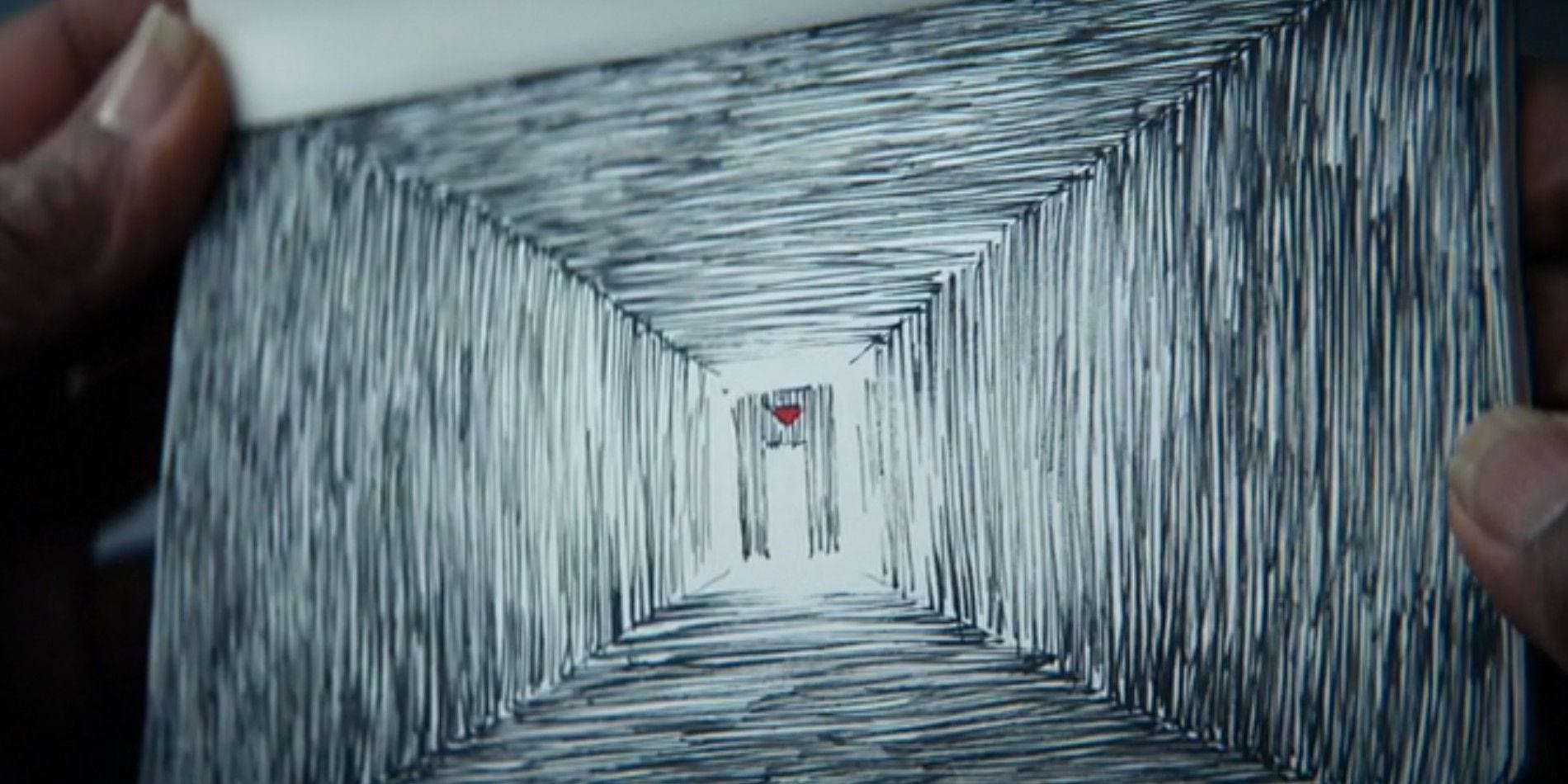
One of my favorite arcs in the series is Irving’s. Played by veteran actor John Turturro, Irving is quite the character. I must apologize for the major spoiler now, but as the series progresses, we can see that Irving’s outie is obsessed with what looks like a dark corridor with an elevator at the end. He can’t stop drawing and painting that image. Severance proposes here a, we might call, technologically-induced division of consciousness. However, since the split is not perfect, Irving’s unconsciousness - or subconsciousness - seems to be affecting his conscious experiences in the external world. Where have we heard anything like that before? Enter Sigmund Freud…
Freud’s theory of the unconscious states that memories, particularly traumatic ones, could be repressed into the unconscious mind, where they would influence thoughts, feelings, and behaviors without the individual’s awareness. There’s a sort of dynamic between the conscious and the unconscious mind in every individual. A type of struggle, so to speak. Freud, the founder of psychoanalysis, believed that therapy centered on conversations with patients, encouraging them to explore dreams and engage in free association—that is, speaking whatever came to mind in response to a prompt— was an effective way to make the unconscious mind emerge.
Behind Freud’s idea of the unconscious is the notion that one must uncover repressed thoughts and feelings buried deep down because they are the root of emotional suffering. Is any of that scientifically proven? Not quite. Freud is known for numerous controversial theories, including the Oedipus complex, dream symbolism, repressed sexuality, and concepts like the Id, Ego, and Super-ego, which represented instinctual drives, moral conscience, and the mediating self. Most of his theories cannot be falsified—tested or disproven. In other words, they can be considered pseudoscience.
I understand that many people might get angry because of how Freud has fallen out of cognitive science. That’s why I need to confess something. Although many of Freud’s principles do not make sense in light of new cognitive science findings, we must pay our respects to him and acknowledge his contribution to the world of psychotherapy. Let’s just say that without Freud, most mental health patients could still be in straitjackets, being tortured and electroshocked without good reason today. Nonetheless, we must also admit that Freud got a lot of things wrong.
To be fair, today, we know that unconscious processes do exist. Neuroscience shows us that we automate things as we turn them into habits so we can free our working memory (which is conscious) to do things that require conscious effort. We can all drive pretty much on autopilot while brushing our teeth, talking on the phone, even texting—no matter how dangerous it might be. We can even make decisions, form impressions, and solve certain problems without conscious deliberation. But this unconscious is certainly not a mysterious deposit of repressed desires influencing our everyday lives in ways we don’t know. It's more like the fast, automatic system of cognition described by thinkers like Daniel Kahneman.
What about trauma? Freud thought that trauma was stored in the unconscious mind, trying to find its way out and interfering with people’s daily lives. But we can’t really call that repressed memories. Decades of research in cognitive psychology and neuroscience have actually shown that traumatic events tend to be remembered well over time, even if individuals wish they could forget them.
Who are we after all?
Even though the science doesn’t add up, I’m a big fan of Severance. I think that what makes the show so compelling is how it metaphorically refers to both ideas of identity and consciousness. What makes us who we are if not our memories, emotions, desires, knowledge about the world, relationships, and the like? You know what’s scary? What would be the consequences of losing our identity, our core values, and not being able to remember anything? Imagine for a second that humans could actually split their memory into two. Can you think of the applications of such technology? We could work on secret projects and never know what we helped create. Or maybe we could be forced to do atrocious things, even kill people, and not remember a single thing.
That’s scary but also incredibly far-fetched. Memory isn't a single entity we can remove, split, or implant like a chip. We can’t divide our consciousness. We are the product of our genome and every experience we have in every space and time we exist in. Like most remarkable sci-fi series and movies, Severance isn't really about neuroscientific accuracy. It’s a clever metaphor that invites us to reflect on identity, autonomy, what it means to remember, to forget, and to be whole.
If anything, I suppose we’re splitting our lives by wearing masks and adding filters to our photos on social media. That’s harming us. We keep looking at people’s perfect Instagram profile and drooling over their holiday pictures around the world or their perfect bodies. We keep comparing our professional achievements to people we don’t even know we follow on LinkedIn. We need to make peace with who we are and try to be true to ourselves.
I’ll tell you one thing. I can’t wait for season 3 to come out. And I really hope it doesn’t take 2 or 3 years. What about you?